

Huzhou Sanjin Special Textile Co., Ltd. was founded in 2002, located in the beautiful Taihu Lake in Changxing County, It is a private and technology enterprise which is specialized in garment fusible interlining and also various of knitted fabrics.Adhesive interlining is widely used in various types of clothing, shoes and hats and composite fabrics.Knitted fabrics are widely used in sportswear, uniforms.
Why Choose Us
Rich Experience
Our company is specialized in various of garment fusible interlining, the registered capital is 50million, is a very strong professional interlining production factory.
Advanced Equipment
The equipments we owned are as these: Six sets of German Carle Mayer warp speed",six sets of coating machines : one paste dot (double width), one double dot (double width) ,one paste dot (single width) and one double dot(single width).In addition we also have one set of warping-sizing equipment,two sets of dying-printing equipment and 400 rapier machines,20 jets, 300 water jets, 50 round machines, 2 hot melt adhesive production lines.
Quality Assurance
With ISO certifications and Oeko-Tex adherence, we ensure quality, durability, and eco-responsibility.
Our Certificates
To support our growth in Southeast Asia, we have established a long-term office in Vietnam. Our company has passed ISO 9001, ISO 14001, and Oeko-Tex Standard certifications, demonstrating our commitment to quality and sustainability.


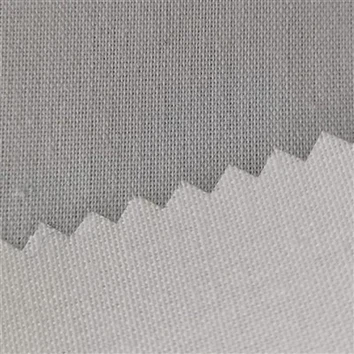


Commonly used interlining fabrics are generally woolen interlining, linen interlining, cloth interlining and chemical interlining.
(1)Woolen interlining is stiff to the touch, with good elasticity, and is mostly used for the interlining of medium and high-grade fabrics.
(2)Linen interlining's hardness is moderate, with good elasticity, so it is suitable for the lining of Zhongshan clothes and suits.
(3)Cloth interlining is flat on the surface, thick, soft in texture, with a certain degree of stiffness and elasticity, and is the general clothing interlining.
(4)The chemical interlining has high bonding fastness and is resistant to washing without shrinkage, discoloration, degumming, material seepage. It is light and soft to the touch, plump and elastic, and widely used.
Structure and Support: Think crisp collars, structured cuffs, and perfectly shaped lapels.
Enhanced Drape: Interlining can transform a stiff fabric into one that flows beautifully.
Increased Durability: It reinforces stress points, extending the life of your garments.
Added Warmth: Certain types of interlining provide an extra layer of insulation.

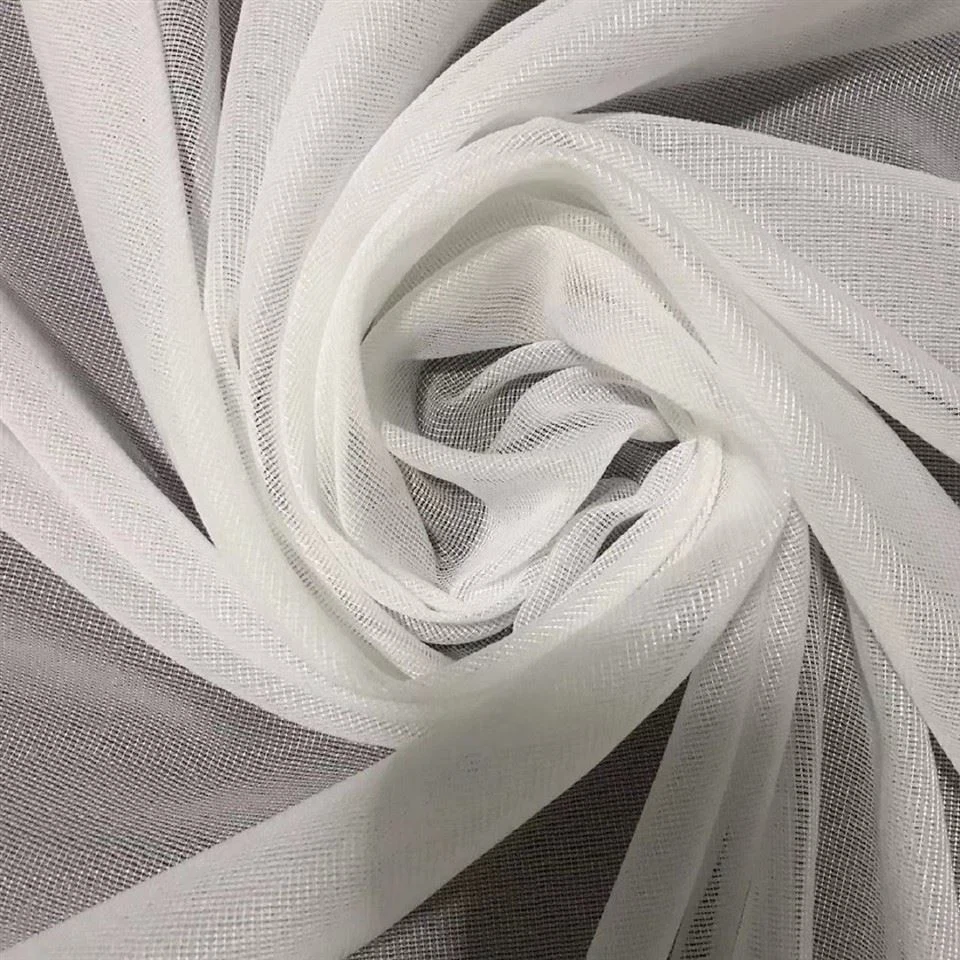
How Many Types Of Interlining Fabrics Are There?
Bonded interlining, woven interlining, non-woven interlining, inlay interlining, double-sided interlining, trouser waist interlining, shirt interlining, outerwear interlining, fur interlining, composite interlining, etc... (according to different situations)
Garment interlining: A textile material applied to the inner layer of each part of the garment. To show the characteristics of the garment modeling design.
Base fabric: A fabric used for weaving interlining.
Cotton and linen interlining: Refers to the original interlining. Without finishing process or only sizing stiff finishing.
Woven resin hair interlining: Also known as hair interlining. It is made of cotton, chemical fiber, wool pure spinning or blending as light yarn, chemical fiber and yak hair or other animal hair blending as weft yarn. Woven into the base fabric, and made by resin finishing.
Woven resin interlining: Abbreviated as resin interlining. It is a woven or knitted fabric made of cotton and chemical fiber for pure spinning or blending. And it is processed practicing bleaching or dyeing, and then finished with resin.
Woven (or knitted) hot melt bonded interlining: Abbreviated as woven fusible interlining. It is a woven or knitted fabric made of pure or blended cotton and chemical fiber.
Nonwoven hot melt fusible interlining fabric: Also known as nonwoven fusible interlining. It is made of non-woven fabric after the thermoplastic hot melt adhesive coating process.
Uses of Interlinings
Interlinings are materials that are fused or sewn to specific areas on the inside of garments or garment components. They may provide shape, support, stabilization, reinforcement, hand, and improved performance for garments.
Interlining materials are generally used in collar, waist band, cuffs, jackets, outerwear plackets, blazers, etc. It can be used to protect fabrics, especially those used in drapes and consequently often exposed to direct light. The intricacy of interlinings used differs largely between tailored wear and other kinds of garments. Delicate fabrics like silk and velvet can suffer from sun damage if hung with a liner alone, and most drapers recommend the use of an interlining for the life of the fabric.
Interlinings are available in a wide range of weights and constructions to match the characteristics of the base fabrics they will support. It can be woven or nonwoven construction, both of which can be constructed to give a different softness or resilience in different directions. Woven interlinings are generally of plain weave construction. In the lighter weight interlinings, they may have a cotton warp and weft yarns which will give a soft handle in both directions, or a cotton warp and a viscose weft to give better crease recovery and retention of shape.
Burning Wool - Cold Stacking - Reboiling and Bleaching - Drying - Stentering And Shaping - Resin - Baking - Coating - Packaging and Inspection.
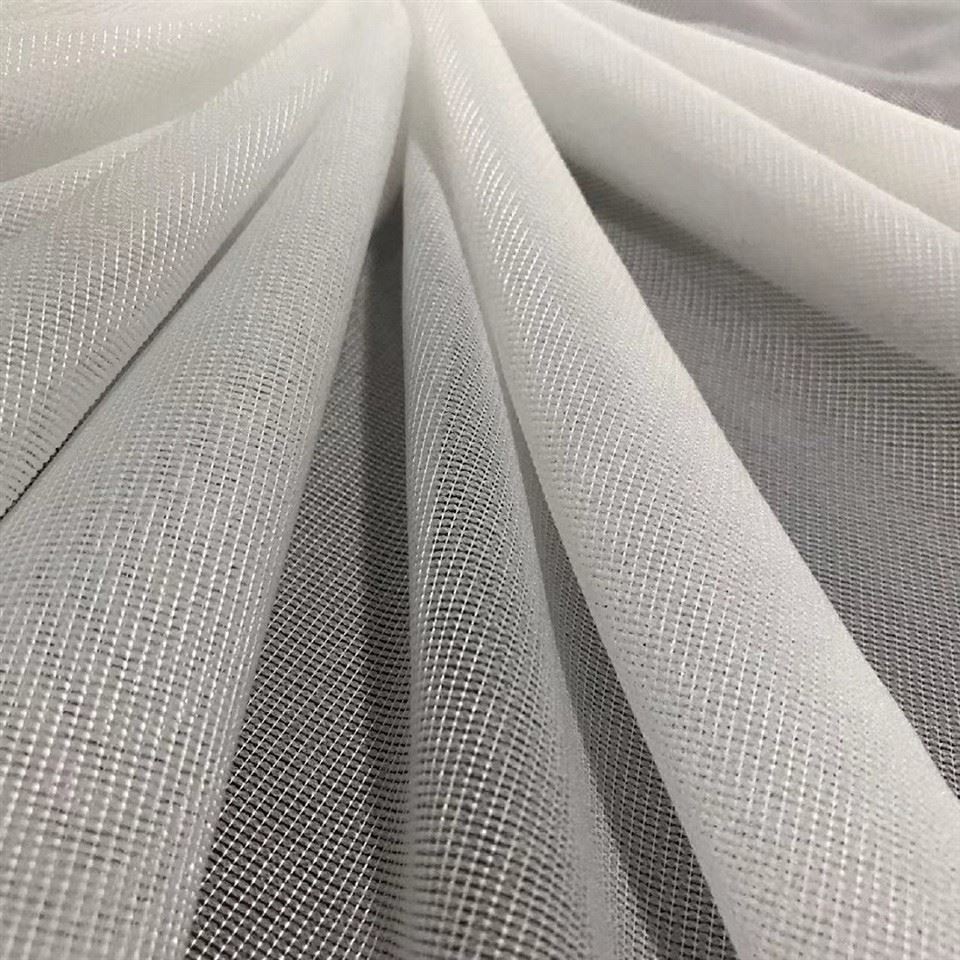

●Germ cloth; The processing technology of the germ cloth, the indicators. To meet the standard, mainly reflected in the flat cloth, a reasonable proportion of various raw materials.
●The content of the bottom slurry should be high and the viscosity is moderate
●Rubber powder; The size of rubber powder particles and the argyle coefficient should be selected correctly
FAQ
We're professional interlining manufacturers and suppliers in China, specialized in providing quality products and fast delivery. Please feel free to wholesale high-end interlining from our factory. Contact us for customized service and free sample.