

Hey there! As a supplier of knit interlining, I've seen firsthand how crucial it is to match the right knit interlining with different fabric weaves. It can make or break the final look and feel of a garment. So, in this blog, I'm gonna share some tips on how to do just that.
Let's start by understanding what knit interlining is. Knit interlining is a type of fabric that's used to add structure, support, and stability to other fabrics. It's commonly used in clothing, especially in areas like collars, cuffs, and waistbands. Knit interlining comes in different weights, thicknesses, and stretch properties, which makes it versatile for various applications.
Now, let's talk about different fabric weaves and how to match them with knit interlining.
Plain Weave Fabrics
Plain weave is one of the most basic and common fabric weaves. It's made by interlacing the warp and weft threads over and under each other in a simple pattern. Fabrics like cotton, linen, and some types of silk are often woven in a plain weave.
When it comes to matching knit interlining with plain weave fabrics, you want to consider the weight and drape of the fabric. For lightweight plain weave fabrics like cotton voile or silk organza, a lightweight knit interlining is a good choice. It'll add a bit of body without making the fabric too stiff. You can check out Fabrics For Clothing Lining for some options.
On the other hand, for heavier plain weave fabrics like denim or canvas, a medium to heavyweight knit interlining will provide the necessary support. It'll help the fabric hold its shape and prevent it from sagging or stretching out.
Twill Weave Fabrics
Twill weave is characterized by a diagonal pattern on the fabric surface. Fabrics like wool twill, cotton twill, and gabardine are examples of twill weave fabrics. Twill weaves are known for their durability and strength.
When matching knit interlining with twill weave fabrics, you need to think about the fabric's texture and stiffness. Twill fabrics can be quite stiff on their own, so you don't want to use an interlining that's too heavy and will make the garment overly rigid. A medium-weight knit interlining with some stretch is usually a good match. It'll complement the fabric's natural drape and add a bit of flexibility. Suit Lining can be a great option for twill fabrics used in suits.
Satin Weave Fabrics
Satin weave creates a smooth, shiny surface on the fabric. Fabrics like silk satin, polyester satin, and acetate satin are commonly used in formal and eveningwear.
Satin fabrics are known for their luxurious feel and drape. When choosing a knit interlining for satin, you want to go for a lightweight and soft interlining that won't interfere with the fabric's smoothness. A sheer or semi-sheer knit interlining can be ideal. It'll add a bit of support without detracting from the fabric's elegance. Check out Crepe Lining Fabric for some suitable options.
Jacquard Weave Fabrics
Jacquard weave allows for intricate patterns to be woven into the fabric. Fabrics like brocade, damask, and jacquard silk are examples of jacquard weave fabrics.
Jacquard fabrics are often used in high-end and decorative clothing. When matching knit interlining with jacquard fabrics, you need to be careful not to overpower the fabric's pattern. A lightweight or medium-weight knit interlining that has a smooth surface and doesn't add too much bulk is the way to go. It'll help the fabric hold its shape while still allowing the pattern to shine through.
Consider the Stretch
Another important factor to consider when matching knit interlining with different fabric weaves is the stretch of the fabric. Some fabrics, like jersey and spandex blends, have a lot of stretch. For these stretchy fabrics, you'll want to use a knit interlining that also has stretch. This way, the interlining will move with the fabric and not restrict its flexibility.
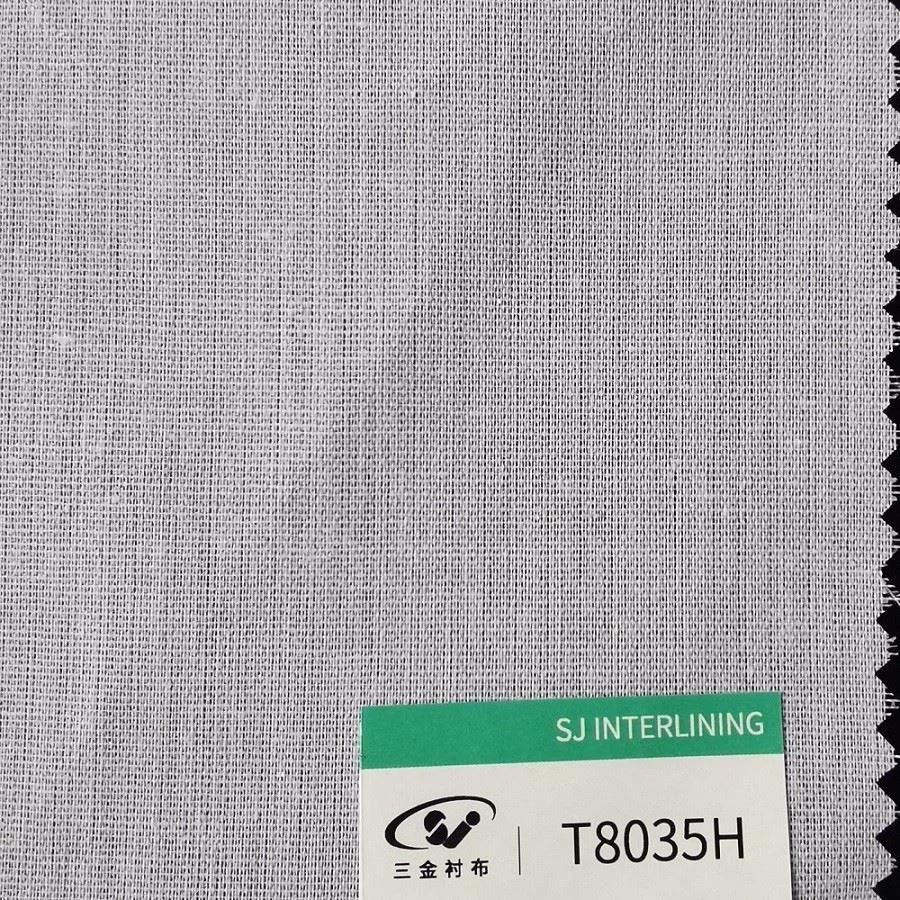

On the other hand, non-stretchy fabrics like wool worsted or cotton broadcloth don't require a stretchy interlining. A non-stretchy or low-stretch knit interlining will provide the necessary support without causing any distortion to the fabric.
Color and Appearance
Don't forget about the color and appearance of the knit interlining. You want the interlining to blend in with the fabric as much as possible, especially if the fabric is thin or sheer. Choose an interlining that has a similar color or a neutral color that won't show through the fabric.
In some cases, you might also want to consider the texture of the interlining. If the fabric has a smooth surface, a smooth interlining will be a better match. If the fabric has a textured surface, a textured interlining can add to the overall aesthetic of the garment.
Testing
Before you commit to using a particular knit interlining with a fabric, it's always a good idea to do a test. Cut a small piece of the fabric and the interlining and sew them together. Then, check how they look and feel. Does the interlining add the right amount of support? Does it affect the drape of the fabric? Does it blend in well?
By doing a test, you can make any necessary adjustments and ensure that you're getting the best results.
Conclusion
Matching knit interlining with different fabric weaves is all about finding the right balance. You need to consider the weight, drape, stretch, color, and appearance of the fabric, as well as the properties of the knit interlining. By following these tips, you can create garments that look great, fit well, and have the right amount of support.
If you're looking for high-quality knit interlining for your fabric projects, I'd love to help. Just reach out to us, and we can discuss your specific needs and find the perfect match for your fabrics.
References
- Textile Science textbooks
- Industry research on fabric interlining applications